


Transport Wheelchair vs Manual Wheelchair Compared

Last Updated: November 26, 2026
Quick Summary
A transport wheelchair is built to be pushed by someone else, while a manual wheelchair is built so the rider can push themselves. The transport chair has small 12-inch rear wheels and no handrims, which makes it lighter, while the manual chair uses large 24-inch wheels with handrims.
- Manual chairs have 24-inch rear wheels with handrims; transport chairs have 12-inch rear wheels and 8-inch casters up front.
- Transport chairs weigh less because there is less chair, but their small wheels struggle on grass, gravel and steep ramps.
- The Protekt Cambria Convertible ships with two sets of rear wheels, so it can be pushed by a caregiver or self-propelled.
- The Vive Transport Wheelchair supports up to 300 pounds, and the Protekt Cambria Convertible is rated at 275 pounds.
- Measure the narrowest doorway and the rider's hips before choosing a model, since a chair can fit the rider but not the door.
Table of Contents
- Who Does the Pushing Decides Most of This
- Weight, Folding and Getting It Into the Car
- How Much Weight a Transport Wheelchair Can Carry
- Pick the Chair Your Household Will Actually Use, and Find One Near You
- Frequently Asked Questions
Who Does the Pushing Decides Most of This
A transport wheelchair is built to be pushed by someone else. A manual wheelchair is built so the person sitting in it can push themselves. That difference shows up first in the wheels.
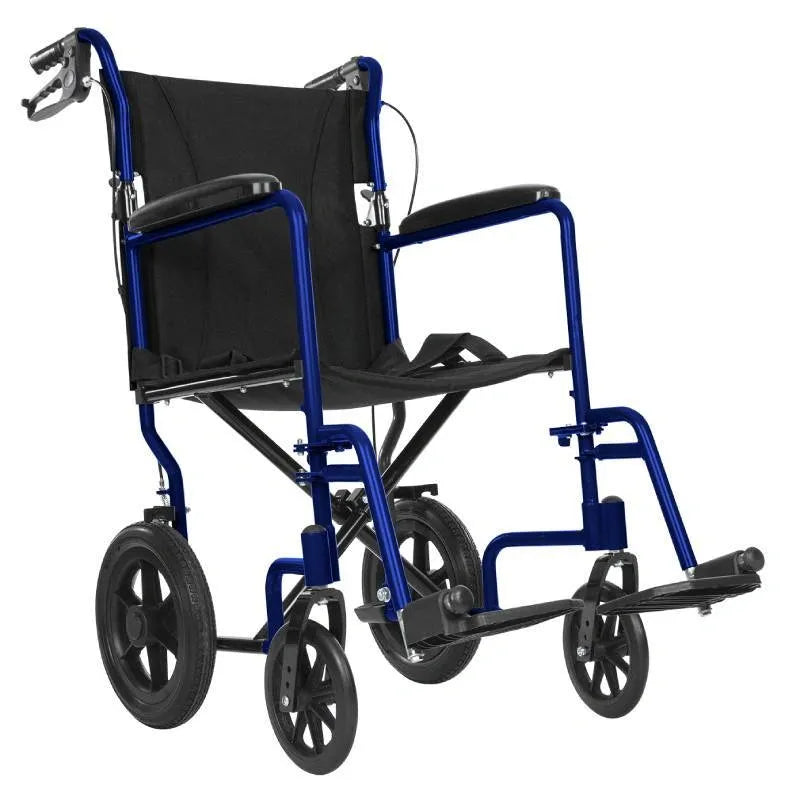
A manual chair runs on large rear wheels, typically 24 inches, with a handrim bolted to each one. The rider grips the handrim and pushes. The big wheel rolls over a doorsill without much argument. A transport chair runs on small rear wheels, often 12 inches, with 8-inch casters up front. There is no handrim. The chair moves because someone behind it pushes.
A manual chair weighs more because the big wheels and the frame that holds them weigh more. A transport chair weighs less because there is less chair.
The Vive Transport Wheelchair is one example of the transport side. It folds, it is meant to be pushed by another person, and it rolls on 12-inch rear wheels with 8-inch wheels up front. [PRODUCT: Transport Wheelchair | https://www.custommobility.net/products/transport-wheelchair]
On the manual side, the ComfyGO X-1 SE uses quick-detach rear wheels so the chair can come apart for storage. [PRODUCT: ComfyGO X-1 SE Manual Wheelchair | https://www.custommobility.net/products/comfygo-x-1-se-manual-wheelchair] Getting a self-propelled chair into a trunk in one piece is a different job than getting it in two.
A convertible chair sits between the two. The Protekt Cambria Convertible ships with two sets of rear wheels, so the same frame can be pushed by a caregiver or self-propelled by the rider. [PRODUCT: Protekt Cambria Convertible Transport Chair / Wheelchair | https://www.custommobility.net/products/protekt-cambria-convertible-transport-chair-wheelchair] That is the chair to look at when the answer to "who pushes" might change.
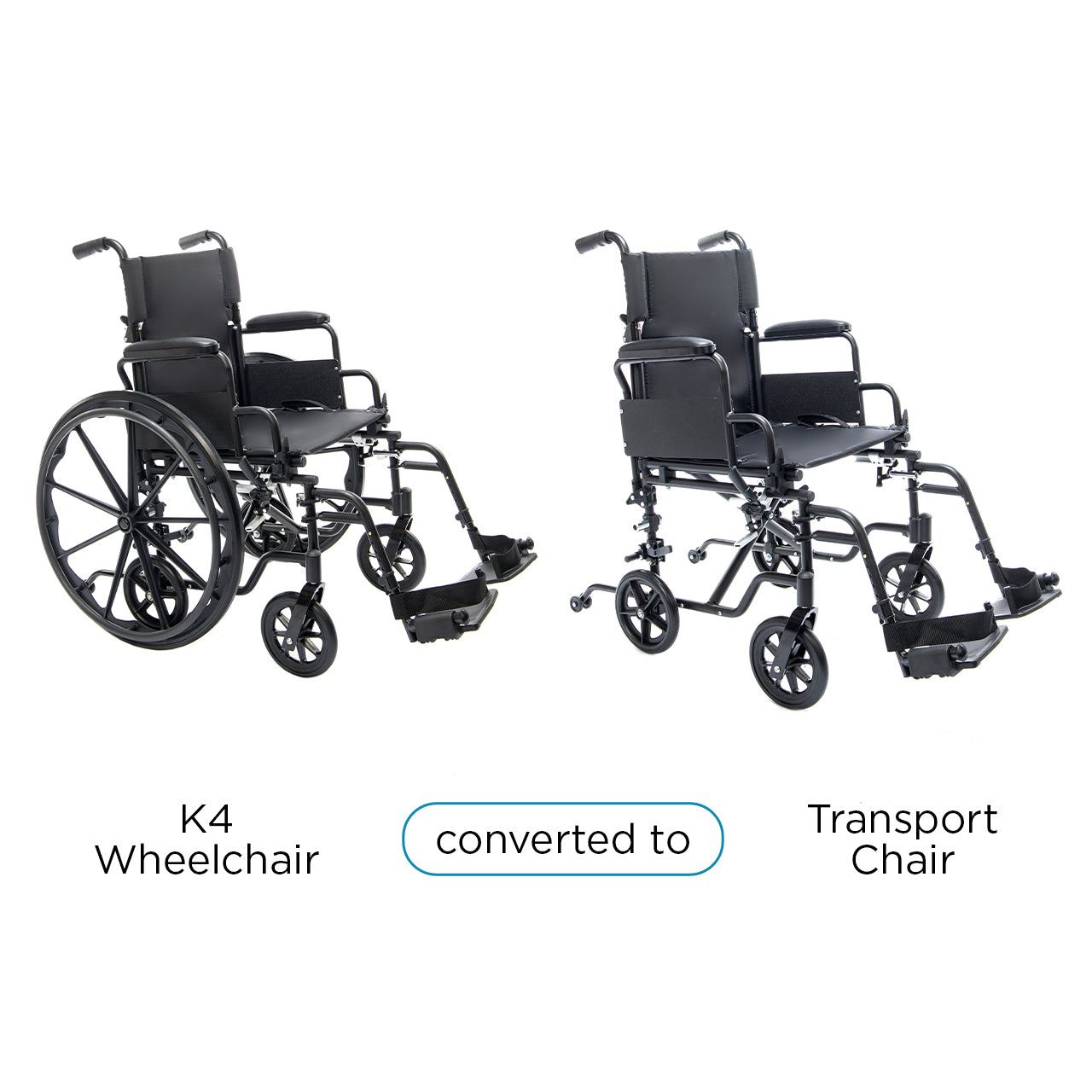
Watch out: a transport chair's small rear wheels are the reason it is light, and the reason it struggles on grass, gravel, and a steep ramp. If the chair will leave pavement, check wheel size first.
Weight, Folding and Getting It Into the Car
Weight decides whether a chair actually leaves the house. The Lightweight Transport Wheelchair weighs 23 pounds and folds down for storage. [PRODUCT: Lightweight Transport Wheelchair | https://www.custommobility.net/products/lightweight-transport-wheelchair]
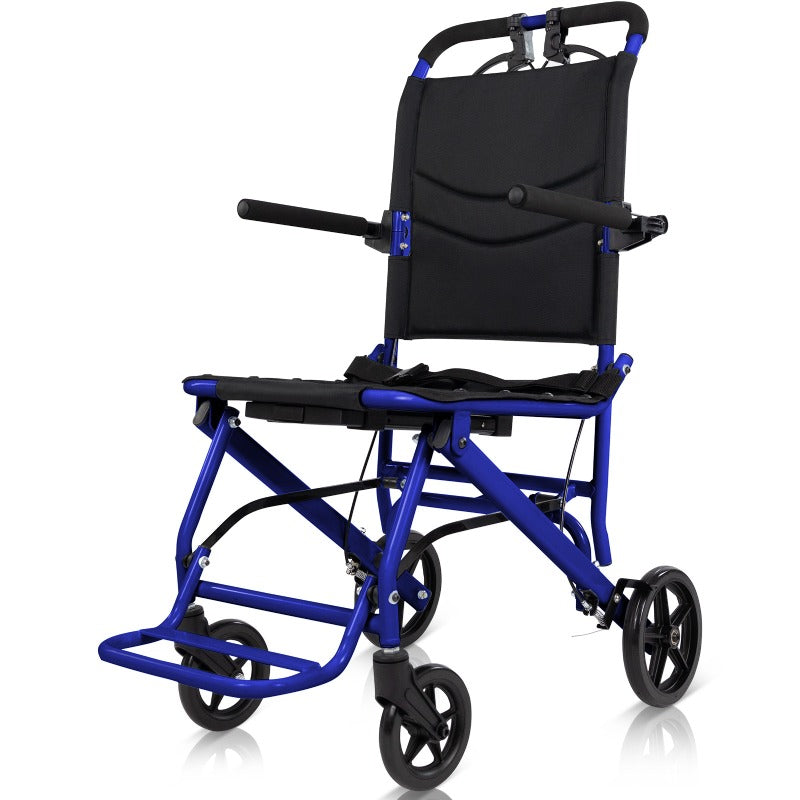
The Feather 18" Transport Wheelchair weighs 13 pounds without footrests, and the manufacturer lists its folded size at 29" x 24" x 9". Check those dimensions against your trunk before you buy. [PRODUCT: Feather 18" Transport Wheelchair | https://www.custommobility.net/products/feather-18-transport-wheelchair]
A self-propelled manual chair is heavier. The ComfyGO X-1 SE weighs 32.5 pounds and uses quick-detach wheels so it can come apart for storage or transport. [PRODUCT: ComfyGO X-1 SE Manual Wheelchair | https://www.custommobility.net/products/comfygo-x-1-se-manual-wheelchair] Before you commit, measure your vehicle and read our guide on what actually fits in a van. [ARTICLE: Van Conversion for Wheelchair Users: What Actually Fits | https://www.custommobility.net/blogs/news/van-conversion-for-wheelchair-users]
How Much Weight a Transport Wheelchair Can Carry
Weight capacity is the number to check first, and it is printed on a sticker on the frame of every chair we sell. The Vive Transport Wheelchair supports up to 300 pounds. The Protekt Cambria Convertible rates 275 pounds on every size. Confirm the rider's weight against the rating for the exact model, and leave a margin. A chair rated at 300 pounds and a rider at 295 is working at its limit every day.
Seat width is measured across the widest part of the hips, then add about an inch on each side. A seat too narrow presses on the hips and thighs. A seat too wide lets the rider slide sideways and makes the chair harder to push straight. Seat depth runs from the back of the buttocks to the back of the knee, minus a couple of inches.
Footrest position matters more than people expect. The footrests should hold the feet so the thighs rest flat on the seat. Too low and the knees drop and the rider slides forward. Too high and the pressure moves to the back of the seat.
Doorway clearance is the measurement that sends people back to the product page. A standard interior door is about 32 inches wide, and the clear opening after the door and hinges is narrower. Measure the narrowest doorway in the house, then compare it to the chair's overall width. A chair that fits the rider but not the bathroom door is the wrong chair.
For heavier riders, the [PRODUCT: Bariatric Transport Wheelchair | https://www.custommobility.net/products/bariatric-transport-wheelchair] option carries a higher rating and a wider seat. Check both numbers against the rider before you order.
Watch out: a chair rated for the rider's weight can still be the wrong chair if the seat is the wrong width. Measure the rider, measure the doorway, then pick the model. If you want a second set of eyes on the numbers, call us.
The numbers that matter most are the weight rating, the seat width, and the doorway clearance, and the article gives these figures for the models it names.
| Item | Value | Note |
|---|---|---|
| Vive Transport Wheelchair capacity | Up to 300 pounds | Rating printed on the frame sticker |
| Protekt Cambria Convertible capacity | 275 pounds | Rated the same on every size |
| Standard interior door width | About 32 inches | Clear opening is narrower |
| Seat width measurement | Across widest part of hips | Add about 1 inch per side |
| Rider margin advice | Leave room below the rating | Chair at 300 with a 295-pound rider is at its limit |
Pick the Chair Your Household Will Actually Use, and Find One Near You
Start with one question: who will do the pushing, and how often will the chair leave the house? A chair that rides in the car twice a week for appointments suits a transport model. A chair the rider uses across the day, rolling themselves, suits a manual one.
The Protekt Cambria Convertible handles both roles, with two sets of rear wheels. [PRODUCT: Protekt Cambria Convertible Transport Chair / Wheelchair | https://www.custommobility.net/products/protekt-cambria-convertible-transport-chair-wheelchair] Its manual counterpart is the ComfyGO X-1 SE for riders who want to self-propel. Compare the two side by side and call us if you want help choosing. We are a mobility equipment company in Athens, Georgia, and we ship across the lower 48.
Frequently Asked Questions
Which is easier to push, a wheelchair or a transport chair?
A transport chair is built to be pushed, so it is usually the easier of the two for a companion. Its smaller 8 inch rear wheels roll well on flat indoor floors and short walks, while a manual wheelchair with large rear wheels is designed for the rider to push themselves. The Lightweight Transport Wheelchair weighs 23 pounds, and the Protekt Cambria weighs 23, 24 or 25 pounds as a transport chair depending on width, which is light enough for most caregivers to tilt and roll. Push effort also depends on the surface, so test it on the ground you will actually use.
Can I use a transport chair as a wheelchair?
Not every transport chair works that way. The Protekt Cambria Convertible Transport Chair / Wheelchair is the exception: it includes two sets of rear wheels, quick release 24 inch wheels for self-propelling and 8 inch wheels for use as a transport chair. Its wheelchair setup weighs 31.5 to 33.5 pounds, compared with 23 to 25 pounds in transport mode. The standard Transport Wheelchair is meant to be pushed by another person, not self-propelled, so it should not be used as a chair the rider drives independently.
Is a transport chair suitable for everyday use?
A transport chair suits short trips such as appointments, errands and family visits, where someone is pushing. It is less suited to daily use where the rider needs to move around independently, since it depends on a companion for every trip. For everyday self-propelling, a manual wheelchair such as the ComfyGO X-1 SE is the better fit. It weighs 32.5 pounds, has quick-detach wheels and a side brake the rider can operate alone, and it rates to a 300 pound load. Many households keep one of each.
Related Articles


Need Help Choosing?
Our mobility specialists can help you find the perfect solution.
Get a Free Consultation
Tell us what you need — we'll handle the rest.
Ready to Regain Your Independence?
Schedule a free, no-obligation consultation with one of our mobility specialists today.
Get Your Free Consultation