


Alternatives To Portable Wheelchair Ramps For Home Access

Quick Summary
A portable wheelchair ramps setup works for a single low step, but it stops working when the rise is tall, the run is long, or the ramp blocks the walkway. Better alternatives include stairlifts for interior stairs, vertical platform lifts for porches and decks, and portable stair climbers only for occasional trips with a caregiver present.
- A portable ramp suits a single low step, but gets steep once the rise passes roughly a foot.
- A straight stairlift goes in during a single visit in two to four hours.
- A curved stairlift rail is custom built, arrives in three to five weeks, then installs in one day.
- A vertical platform lift covers a 4-foot rise in a footprint of a few feet.
- Measure the landing space before buying a platform lift or stairlift, not just the rise.
Table of Contents
- When A Portable Ramp Stops Being Enough
- Stair Lift Alternatives For Seniors Start With Rise And Space
- A Vertical Platform Lift Handles Porches And Decks
- A Standing Platform Stair Lift For Home Use
- Portable Stair Lift No Installation Options Are Limited
- Comparing The Options Side By Side
- Booking A Home Assessment Before You Choose
- Frequently Asked Questions
Alternatives To Portable Wheelchair Ramps For Home Access
Last Updated: November 24, 2026
When A Portable Ramp Stops Being Enough
A portable wheelchair ramps setup is a good answer for a single step at the front door. It stops being a good answer when the rise gets taller, the run gets longer, or the ramp starts eating the only walkway you have. Most families find that out after the third time someone has to be pushed up an incline steeper than it looks.
The pattern repeats with portable wheelchair ramps that were bought for a short emergency. The ramp was bought for a short emergency, then stayed for years. Now the rise is too high, the slope too steep for a power chair, or the ramp blocks the way to the mailbox.
Watch for these signs that a portable ramp has stopped working:
- The ramp needs a run longer than the space allows
- A caregiver has to push the chair up the slope every time
- The ramp will not stay put in wet weather
- The user has stopped going out because the entry is too hard to manage
Each sign points to a different alternative. The right one depends on the rise and the space you have.
Stair Lift Alternatives For Seniors Start With Rise And Space
If the trouble is interior stairs, a stairlift is usually the first option to compare. A stairlift carries a seated person along the stair rail, and it needs no ramp at all. The question is whether the staircase can take the rail.
A straight staircase is the simplest case. Harmar's Pinnacle SL300 is a straight stairlift rated for up to 300 lbs, and it folds against the wall when not in use. That matters in a narrow stairwell.
Curved staircases are a different job. A curved rail is custom built to the staircase, so it takes longer to arrive. A straight stairlift typically goes in during a single visit in two to four hours. A curved rail takes three to five weeks to build, then installs in one day once it lands.
For a parent who is still steady on their feet but finds the stairs tiring, a stairlift often beats a ramp. It keeps the rest of the house usable.
- Good fit: a straight staircase with room for the seat and rail
- Harder fit: a narrow or curved stairwell, or a landing that is too short
- Not a fit: a user who needs to stay in the chair during the trip, which calls for a lift instead
A Vertical Platform Lift Handles Porches And Decks
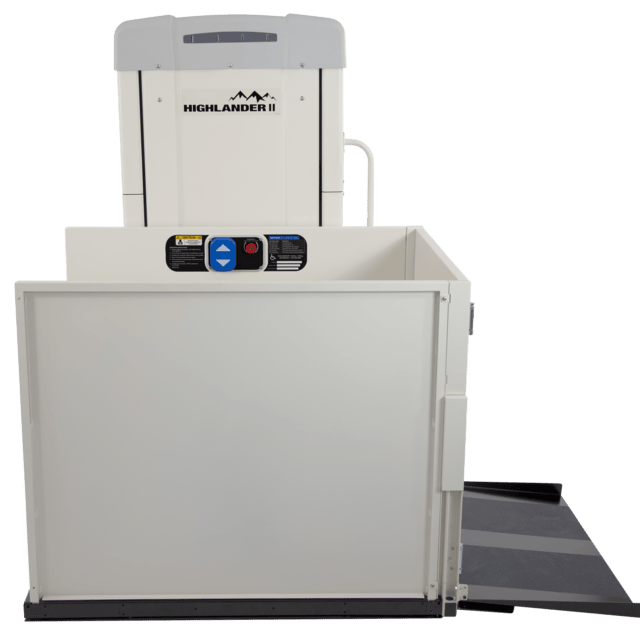
A vertical platform lift moves a wheelchair or scooter straight up or down, inside its own enclosure. Compare platform lift options for porches, decks and garages. It is the alternative when the rise is larger than a ramp can handle sensibly. A ramp for a 4-foot rise needs a long, steep run.
The Bruno VPL-3153 and VPL-3175 are Bruno's residential platform lifts. Both have a 750 lb rated load for one passenger with a mobility device. The VPL-3153 covers 11 inches to 53 inches of floor-to-floor travel, and the VPL-3175 covers 28 inches to 75 inches.
The Harmar Highlander II carries 750 lb and lifts up to 14 feet. Platform sizes run from 36 by 48 inches to 42 by 60 inches. It is built for outdoor use with a powder-coated finish and stainless steel hardware. Battery backup activates in a power outage and provides a minimum of five complete up-down cycles.
A platform lift is a real purchase, and the price depends on the model, the rise and the options. Custom Mobility installs vertical platform lifts in Georgia with its own technicians. Tell us the height of your steps and we will help you narrow the choice.
A Standing Platform Stair Lift For Home Use
Some people can stand for a short distance but cannot manage stairs on their own. A standing platform stair lift carries the user upright on a small platform along the stair rail. It suits someone who wants to stay on their feet and needs a short, supported ride.
This option works best for a short staircase with a clear landing at each end. The user has to stand and hold on through the ride, so it is not right for someone who needs to stay seated. Assess whether the user can stand safely for the whole trip before committing.
What A Portable Stair Climber For Elderly Users Can And Cannot Do
Portable stair climbers are sold as a no-installation answer to stairs, though they are not a substitute for portable wheelchair ramps at the entry. They are worth knowing about, but they have real limits. Most are designed for a caregiver to operate, and they work best on a short, straight flight with a clear path at the top and bottom.
A portable stair climber cannot replace a fixed lift for a daily, independent trip. It depends on a second person being present, and it does not carry a user who needs to stay in a chair without help. It also does not solve the wheelchair at the entry, which is still a ramp or lift question.
Use a portable stair climber for occasional trips or short flights, and do not rely on one as the only means of access for someone who lives alone.
Portable Stair Lift No Installation Options Are Limited
Many families look for a portable stair lift because they want nothing installed in the house. That is a reasonable goal, especially for a rental or a home that may be sold.
Portable stair climbers come in two broad types. One is a hand truck with a motorized tread that climbs stairs while a caregiver tilts and balances the load. The other is a lighter carrier that folds and rides the stair edge with a second person steering.
Compare that to portable wheelchair ramps. A ramp lets a user roll up under their own power, but only if the rise is low and the slope gentle. A portable stair climber handles a taller rise, but it puts the work on a second person.
A fixed stairlift changes that equation. The user rides alone, the rail stays put, and the seat folds against the wall. The trade-off is installation. A straight stairlift goes in during a single visit in two to four hours.
Watch out: a portable stair climber rated for a short flight can be tempting for a long-term need.
Before buying any portable unit, check the rated load, the step height it can handle, and whether the unit needs a second person to operate it.
Comparing The Options Side By Side
The right alternative depends on the type of access problem you are solving. Portable wheelchair ramps solve a single low step.
| Option | Best For | Needs Installation | Main Limit |
|---|---|---|---|
| Portable ramp | Single low step, short term | No | Steep for high rises, takes walkway space |
| Straight stairlift | Interior straight staircase, seated user | Yes, 2-4 hours | Narrow or curved stairs need more work |
| Curved stairlift | Interior curved staircase | Yes, custom rail 3-5 weeks | Long lead time |
| Vertical platform lift | Porch, deck, garage, multi-foot rise | Yes, concrete pad and power | Needs space and a pad |
| Standing platform stair lift | Short stair, user who can stand | Yes | User must stand safely |
| Portable stair climber | Occasional trips, caregiver present | No | Needs a second person |
A table gets you oriented. It does not make the decision. The decision comes down to four measurements and one honest conversation about who is doing the work.
Start with the rise. Measure floor to floor at the entry or the bottom and top of the stairs. Portable wheelchair ramps work for a rise of a few inches.
Next, measure the landing space. A platform lift needs a level pad at the bottom and clear room at the top.
Then check the doorway and turning clearance. A power chair needs room to turn at the top of a ramp or the threshold of a lift.
Finally, ask who operates it. A portable ramp is pushed by a caregiver. A stairlift is ridden by the user alone.
Watch out: families often buy the cheapest option that fits the rise and skip the landing measurement.
Total cost of ownership is the other comparison most guides skip.
Pros and cons at a glance:
- Portable ramp. Pro: low upfront cost and no installation. Con: steep on tall rises, bulky, and hard on power chairs over long runs.
- Stairlift. Pro: keeps the rest of the house usable and the user rides alone. Con: needs a straight enough staircase and a landing that fits the seat.
- Platform lift. Pro: covers large rises in a small footprint. Con: needs a pad, power, and room at both ends.
- Portable stair climber. Pro: no installation. Con: needs a caregiver and suits short flights only.
If you want to compare a stairlift against your current ramp, start with the stairlift quote page and bring your rise measurement.
Booking A Home Assessment Before You Choose
The fastest way to narrow the options, including whether portable wheelchair ramps will do the job, is a home assessment. Measure the rise at the entry or staircase, note the width and turning room, and check where power and a level pad could go. Photos and measurements help, and so does a short note on how the user gets around now.
Custom Mobility offers free, no-obligation consultations. We can look at your steps or staircase, explain which options fit, and give you an honest read on what is practical in your home. Book a consultation before you buy a ramp or a lift, since a wrong choice is harder to undo than a few minutes of planning.
Frequently Asked Questions
What are some alternatives to wheelchair ramps for home accessibility?
The main options are a vertical platform lift, an inclined platform lift, a stairlift, a home elevator, and a threshold ramp for a single small step. Which one fits depends on how far up the entry sits and how much floor space you have. A vertical platform lift handles a porch or deck rise of up to about 14 feet, and a threshold ramp only covers a few inches. Measure the rise before you compare models, since the rise decides which category even makes sense.
Is a stairlift or a platform lift better for home access?
A stairlift carries a seated person up a staircase, while a platform lift carries a person in a wheelchair or scooter between two levels. If you can transfer into a chair, a stairlift usually takes less floor space. If you need to stay in your mobility device, a vertical platform lift such as the Harmar Highlander II is the better match. Ask us to look at your steps before you choose.
Can a vertical platform lift work at a home entrance?
Yes. A vertical platform lift is often installed at a porch, deck or garage entry where a ramp would run too long. The Bruno VPL-3153 covers 11 to 53 inches floor to floor, and the VPL-3175 covers 28 to 75 inches. Bruno lists a concrete pad as required for a proper approach, and electricity may need to be run to the lift or its battery charger. Plan for that work before install day.
Are portable stair climbers suitable for home use?
Portable stair climbers and stair lift products that need no installation exist, but they depend heavily on the user's strength, balance and the steepness of the stairs. Many people who need a lift for daily use end up with a permanent system because it carries the mobility device or the person without help. Discuss your situation with us before you buy a temporary device, and make sure the device is rated for the weight it will carry.
Related Articles


Need Help Choosing?
Our mobility specialists can help you find the perfect solution.
Get a Free Consultation
Tell us what you need — we'll handle the rest.
Ready to Regain Your Independence?
Schedule a free, no-obligation consultation with one of our mobility specialists today.
Get Your Free Consultation