


How Long a Power Wheelchair Battery Lasts and When to Replace It

Last Updated: November 22, 2026
Quick Summary
A power wheelchair battery usually needs replacing before the chair itself wears out, since the battery is the first part to slow down. Its lifespan depends on battery type, how often the chair runs, and how it is stored and charged. Check your chair's manufacturer for the replacement interval listed for your model.
- Lithium-ion is one of the battery types most often used in power wheelchairs.
- Ask the manufacturer for the replacement interval listed for your specific model.
- Charge after each day of use, not after the battery is nearly empty.
- Avoid letting the battery sit fully drained for long periods.
- Stop using the chair if the battery is swollen, cracked, leaking or hot.
Is your battery due for replacement?Custom Mobility helps you match the right battery and power wheelchair to how you use it.
Talk To Our Team
Table of Contents
- How Long a Power Wheelchair Battery Lasts Before It Needs Replacing
- How Long a Power Wheelchair Battery Runs Per Charge
- How Long a Wheelchair Battery Takes to Charge and Charging Habits That Help
- Power Wheelchair Battery Maintenance and the Signs It Is Failing
- Frequently Asked Questions
How Long a Power Wheelchair Battery Lasts Before It Needs Replacing
A power wheelchair battery usually gets replaced before the chair itself wears out. It is the first part to slow down. Lifespan depends on battery type, how often the chair runs, and how it gets stored and charged.
The battery is a wear item. If you are weighing chair weight and build, compare lightweight power wheelchairs for seniors and check how their batteries are handled. Check it on a schedule instead of waiting for the chair to stop.
Two battery types show up most often:
- Lithium-ion: the type used by the Feather Power Chair Spare Battery and the lithium Jazzy EVO 613.
Ask the chair's manufacturer for the replacement interval listed for your model. That number beats any general rule we could write here.

How Long a Power Wheelchair Battery Runs Per Charge
Runtime per charge is a different question from how long the battery lasts overall. To compare which chairs handle outdoor terrain and longer runs, see which power wheelchair handles outdoor use best. A battery can run a full day and still be near the end of its service life.
Per-charge range varies by model. Use the manufacturer's figures as a starting point. Hills, rough ground, a heavier rider, cold weather and stop-and-go driving all cut the range.
Here is what the manufacturers list for a few chairs in our catalog:
- The Jazzy EVO 613Li is rated at up to 21 miles per charge at 200 lbs. and 17.6 miles at the full 300 lb. capacity.
- The Golden Stride is rated at 9.3 miles.
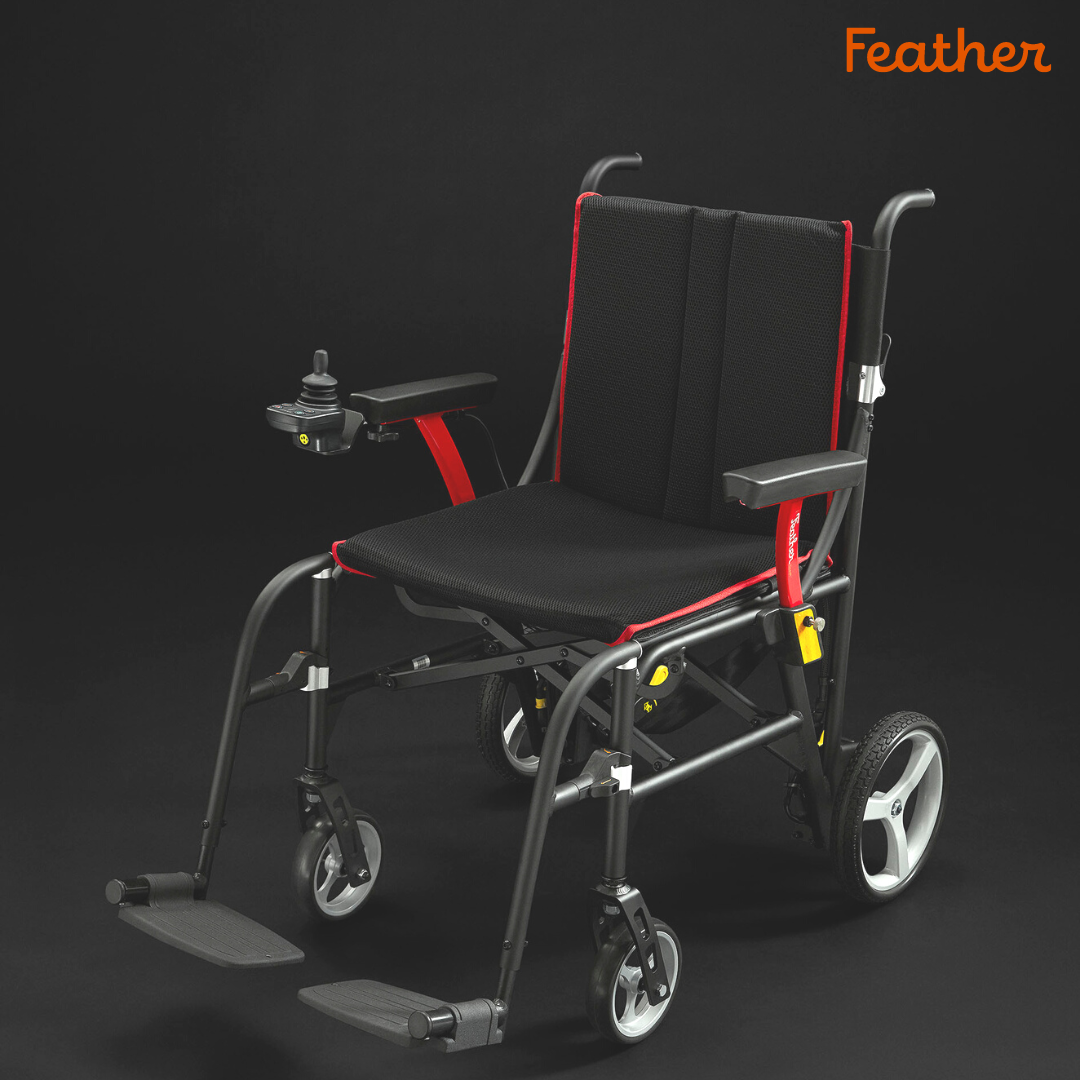
- The Feather Power Wheelchair is rated at up to 11 miles.
Those are the manufacturers' ratings, not guarantees. A 21-mile rating on flat pavement in mild weather is one thing. The same chair on a hilly route in January is another.
Start with the published range and subtract for the conditions you actually drive in. Plan on less range for hills, rough ground and cold weather than the rating shows.
A range that drops suddenly is a different problem from a range that was always short. If the chair used to make a full day and now quits by mid-afternoon, the battery is wearing out. If it never made the rated distance, the rating was optimistic for your terrain.
When range falls short, check the simple things first. Confirm the charger is completing a full cycle. Look at the tires, because low pressure or worn tread costs you distance. Then look at the battery itself. Our team can help you sort out whether a replacement battery or a different chair fits the distances you actually drive.
Manufacturer ratings for a few chairs in our catalog look like this, though real range depends on your terrain and conditions.
| Chair | Rated range per charge | Note |
|---|---|---|
| Jazzy EVO 613Li | Up to 21 miles at 200 lbs. | 17.6 miles at 300 lbs. |
| Golden Stride | 9.3 miles | Manufacturer rating |
| Feather Power Wheelchair | Up to 11 miles | Manufacturer rating |
How Long a Wheelchair Battery Takes to Charge and Charging Habits That Help
Charging time depends on the battery and the charger. Check the charger's label and the manual for the number on your model.
Habits that help the battery last:
- Charge after each day of use, not after the battery is nearly empty.
- Avoid letting the battery sit fully drained for long periods.
- Unplug once the charge is complete.
- Keep the charger and cable in good shape. A frayed cable is a safety problem.
- Store the chair somewhere mild. Extreme heat and cold both shorten battery life.
The Feather spare battery is charged with its supplied off-board charger. Remove the battery from the power base, then plug the charger into the battery.
Power Wheelchair Battery Maintenance and the Signs It Is Failing
Routine care is simple. Keep the battery terminals clean and dry. Check the connections on a regular schedule. Run the charging routine the same way every time.
Watch for these signs that a battery is failing:
- Range drops noticeably from what it used to be.
- The battery takes much longer to charge than before.
- The chair slows down or stops partway through a trip.
- The battery case is swollen, cracked or leaking.
- The charger gets warm or the battery smells strange while charging.
If you see a swollen, leaking or hot battery, stop using the chair and get it checked before charging again. A swollen case is a safety problem, not a maintenance item.
When range drops, work through a short checklist before you buy anything. Charge the battery fully and note how long the charger runs. Check the terminals for corrosion. Confirm the charger itself is working, because a weak charger mimics a weak battery. If the chair still falls short after a full charge on a known route, the battery is the likely cause.
A new battery has to match the chair on four things: voltage, capacity, chemistry and connector. Voltage and chemistry are the ones that bite. Pull the old battery and read the label before you order, or call us with the chair's model number and we will look it up.
Old power wheelchair batteries do not go in the regular trash. If a replacement is due, you can browse the current power wheelchair range. Check with your local waste authority for battery recycling options.
Watch out: do not mix an old battery with a new one in a chair that runs two. The older battery drags the new one down and you replace both again sooner.
Reach out before you order, with your chair's model number, and we will walk through the options with you.
Frequently Asked Questions
How often should wheelchair batteries be replaced?
How often a power wheelchair battery needs replacing depends on how often the chair is used, how it is charged and how it is stored. A chair used daily will wear its battery out faster than one used a few times a week. If the battery no longer holds a charge for the trips you normally make, or the chair shuts down partway through a route, it is time to have it checked. Confirm the replacement battery matches your chair model before ordering, and ask the supplier about the exact specification for your chair rather than relying on a general estimate.
Can you revive a dead power wheelchair battery?
Sometimes. A battery that was left discharged for a long time, or that has been charged incorrectly, may recover partly after a full, slow charge. If the battery still will not hold a charge after a proper full charge, or it swells, leaks or smells hot, stop using it and do not try to force a recharge. A damaged battery can be unsafe. Have the battery tested by a qualified technician before deciding whether it can be revived or needs replacing.
Should I leave my power chair plugged in all the time?
Follow the charging guidance in your chair's owner manual, since battery chemistry and charger design vary by model. In general, plugging in a chair after each day of use and unplugging it when charging is complete is a sound routine. Avoid leaving a battery sitting at a low charge for long periods, because that wears it down faster. If your chair is stored for weeks at a time, keep the battery charged according to the manufacturer's instructions.
Related Articles


Need Help Choosing?
Our mobility specialists can help you find the perfect solution.
Get a Free Consultation
Tell us what you need — we'll handle the rest.
Ready to Regain Your Independence?
Schedule a free, no-obligation consultation with one of our mobility specialists today.
Get Your Free Consultation