


Wheelchair Lift Inspection: 7 Checks Before Every Route

Last Updated: November 18, 2026
Quick Summary
A wheelchair lift inspection starts with a full test cycle before any passenger boards, then a daily walk-through of eight checks with clear pass or fail conditions. Drivers stop at the first failure, pull the lift from service, and log the defect. Securement straps and floor anchors also get tested by hand every morning, since they wear out quietly.
- Cycle the lift fully before any passenger steps on, watching every joint and the platform edge.
- The daily operator check covers eight items, each with a clear pass or fail condition.
- Pull each securement strap and hook by hand every morning and replace any with a defect.
- A driver can confirm a light works, but a technician must check hydraulic pressure and wiring.
- Keep a daily log of every check and defect so repairs are documented.
Table of Contents
- Run The Lift Through A Full Cycle Before The First Passenger Boards
- A School Bus Wheelchair Lift Inspection Checklist Your Driver Can Follow
- Wheelchair Tie-Downs And Occupant Restraints Fail Quietly, So Test Them By Hand
- Keep A Maintenance Log That Shows Every Defect Was Caught And Fixed
- Frequently Asked Questions
Run The Lift Through A Full Cycle Before The First Passenger Boards
A wheelchair lift that works on Monday can fail on Tuesday morning, so every wheelchair lift inspection starts with a full test before anyone rides. Cycle it fully before any passenger steps on. Raise it, lower it, and stow it while you watch every joint and the platform edge. A lift that hesitates, jerks, or sounds wrong gets pulled from service. If you need help with that kind of fault, schedule preventative maintenance for your lifts.
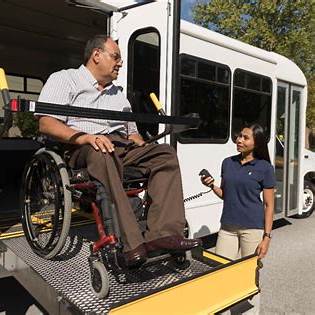
Test the controls too. Check that up, down, and stow respond the same way from the driver's position and from the lift itself. Confirm the interlocks stop motion when they should.
A School Bus Wheelchair Lift Inspection Checklist Your Driver Can Follow
Your driver should walk the same sequence every morning, in the same order, and stop at the first failure. Skipping steps turns small problems into route delays.
Start at the platform and work outward toward the controls. A cracked platform edge or a missing barrier is a stop-work condition.
- Platform surface: clear of debris, ice, and standing water. Fail on cracks, soft spots, or anything that rocks underfoot.
- Platform edge and barrier: the barrier raises and locks by hand. Fail if it folds past its stop, binds, or the latch will not catch.
- Roll-off guard and side plates: present, fastened, and flat. Fail on missing bolts or a plate that lifts when you press it.
- Control box: switches firm, H2 subheads that read like statements, readable, no cracks in the housing. Fail if a switch sticks or the label is gone.
- Power and hydraulic connections: no leaks, no chafed wiring, terminals tight. Fail on any wet fitting or a wire you can wiggle at the connector.
- Safety stops and warning lights: cycle the lift and confirm the stops halt motion and the lights come on. Fail if the lift keeps moving past a stop.
- Manual or emergency operation: the handle is where it belongs and you know how to use it. Fail if the handle is missing or the release will not move.
- Stowage: the locks engage and the lift sits flush when stored. Fail if it hangs, rattles, or will not latch.
That is the daily operator check. It takes a few minutes and belongs to the driver, not the shop.
Periodic maintenance is a different job on a different schedule. A qualified technician handles the hydraulic fluid, pump, cylinder, wiring harness, interlock adjustment, and structural fasteners. Most fleets split the two: the driver checks daily, and the technician inspects on a set interval defined by the manufacturer's instructions and your own policy. A driver can confirm a light works. A driver cannot confirm a cylinder is losing pressure slowly.
Watch out: a lift that passes every item but hesitates at the top of its travel is still a fail. A hesitation today is a stall next month with a passenger aboard.
If anything fails, pull the lift from service and log it. Do not run the route on a lift you do not trust. If you need help with that kind of fault, schedule preventative maintenance for your lifts.
The daily operator check covers eight items, each with a clear pass or fail condition.
| Check | What to look for | Fail if |
|---|---|---|
| Platform surface | Clear of debris, ice, and water | Cracks, soft spots, or rocks underfoot |
| Platform edge and barrier | Raises and locks by hand | Folds past its stop, binds, or latch won't catch |
| Roll-off guard and side plates | Present, fastened, flat | Missing bolts or a plate that lifts |
| Control box | Firm switches, readable H2 subheads that read like statements, | Sticking switch or missing label |
| Power and hydraulic connections | No leaks, tight terminals | Wet fitting or wire that moves at connector |
| Safety stops and warning lights | Stops halt motion, lights come on | Lift keeps moving past a stop |
| Manual or emergency operation | Handle present and usable | Handle missing or release won't move |
| Stowage | Locks engage, lift sits flush | Hangs, rattles, or won't latch |
Wheelchair Tie-Downs And Occupant Restraints Fail Quietly, So Test Them By Hand
Securement straps rarely announce that they are worn, which is why a careful wheelchair lift inspection includes pulling each one by hand every morning. They fray from the inside, the hook bends a little, the buckle gets stiff, and the whole system still looks fine from the aisle.
Here is what to reject. These defects take a strap out of service on the spot:
- Webbing with cuts, burns, or fraying that reaches the core threads. Surface fuzz is normal wear. A cut you can see daylight through is a fail.
- Webbing stiffened by UV or chemical exposure, or faded to a chalky color across its length.
- Hooks that are bent, cracked, or whose spring gate will not snap closed on its own.
- Buckles that do not lock, that slip under a firm pull, or whose release will not fully seat.
- Stitching that is pulled, broken, or loose at the hook or buckle attachment.
- Any strap with a knot tied in it, or a splice, or a repair made with tape.
Test the floor anchors and track the same way. Learn how wheelchairs are properly secured in an accessible vehicle for a fuller walkthrough of each tie-down point. Grab each anchor and try to move it. A fitting that shifts, spins, or shows a gap under the washer is loose.
Test the occupant belt by hand as well. Pull it out fully, let it retract, and confirm the buckle latches and releases. A belt that will not retract, or that latches only when you jiggle it, gets replaced.
Watch out: a securement that looks fine but moves under a firm pull is not doing its job. If you can rock the wheelchair in its tiedowns by hand, the straps are loose, worn, or routed wrong. Re-secure and re-check before the bus moves.
Not every wheelchair secures the same way. Power chairs with large rear wheels, chairs with non-standard frames, and chairs with add-on equipment can be hard to tie down at the four points the system expects.
Replace any strap that shows a defect. Keep spare straps and hooks on the shelf so a fail does not turn into a missed route.
Keep A Maintenance Log That Shows Every Defect Was Caught And Fixed
A written record protects your riders and your district. Review the compliance expectations that make a defect log necessary for schools and fleet operators. Each morning, record the date, the vehicle number, the driver, and the result of each check. Note every defect, who was told, and when it was repaired.
A log that shows problems were caught and fixed is far stronger than a clean page with no history behind it. See how wheelchair bus maintenance should stay current across a district to compare your own records against that standard. If you manage a fleet and need help keeping lifts in service, call us about the next steps for your buses.
Frequently Asked Questions
What should be checked during a wheelchair bus lift inspection?
Start with the platform: it should raise and lower smoothly, stop level at both ends, and show no gaps or bent edges. Check the controls, the interlocks that stop the lift if the door or the barrier is not in position, and the emergency or manual operation. Then inspect the securement straps, hooks, buckles and floor anchors. Document anything that fails, and pull the lift from service until a qualified technician clears it.
How often should a school bus wheelchair lift be inspected?
Drivers should run a pre-route check every day the bus runs, cycling the lift once with nobody aboard. Preventive maintenance by a qualified technician is a separate, scheduled job. Follow your manufacturer's interval as the floor, and never let a daily check slide because the lift worked yesterday.
How do you inspect wheelchair tie-downs and occupant restraints?
Look for fraying or cuts in the webbing, and check each buckle and hook for cracks, deformation and smooth engagement. Pull each strap by hand to confirm it holds tension and does not slip. Check the floor anchors and track for looseness or damage. Any strap or hardware that fails a hand test comes out of service. Confirm the wheelchair securement and the occupant belt both lock before the bus moves.
Related Articles


Need Help Choosing?
Our mobility specialists can help you find the perfect solution.
Get a Free Consultation
Tell us what you need — we'll handle the rest.
Ready to Regain Your Independence?
Schedule a free, no-obligation consultation with one of our mobility specialists today.
Get Your Free Consultation